Varicose Veins
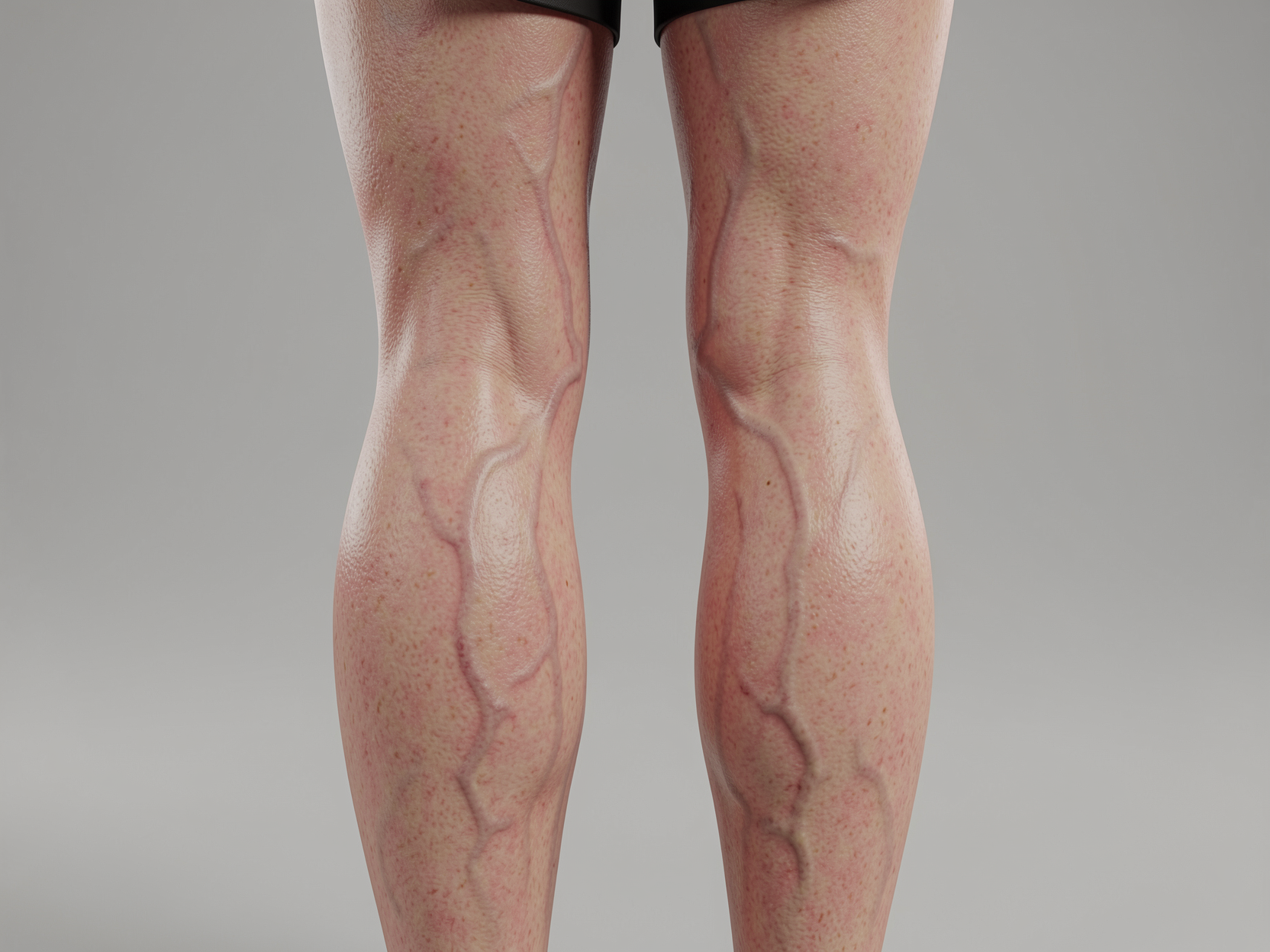
Enlarged, twisted veins that commonly appear in the legs and feet, caused by weakened or damaged vein valves.
Symptoms to Watch For
What It Is
Varicose veins are a common medical issue that affects about one in five American adults. They appear as swollen, twisted, and sometimes painful veins that show on the skin surface, usually on the legs and feet.
Causes and Risk Factors
Varicose veins develop when the valves in your veins are weak or damaged and cannot prevent the blood from flowing back, causing blood to accumulate. Risk factors include gender (women have higher risk), aging, obesity, standing for extended periods, lifting heavy objects, history of blood clots, and genetics.
Lifestyle Modifications
Exercising, elevating the legs, avoiding prolonged standing, and wearing compression stockings can reduce pain and discomfort.
Sclerotherapy
We inject a chemical solution into the diseased veins, causing them to scar and close. Multiple sessions are typically needed.
Laser Treatment
A minimally invasive procedure using laser energy to destroy varicose veins with minimal recovery time.
Vein Ablation
Used for larger varicose veins unresponsive to other treatments, this slightly more invasive technique requires an incision.
Varicose Vein Treatment in Conroe, Huntsville and The Woodlands: Common Questions
Are varicose veins just a cosmetic problem?
Not always. Varicose veins form when valves inside the leg veins weaken and blood pools instead of flowing back to the heart. Many people feel aching, heaviness, swelling or itching, especially after standing. This is called chronic venous insufficiency, and it tends to get worse over time without treatment.
How do you find out what is causing my varicose veins?
A painless vein ultrasound shows how blood is flowing in the leg veins and which vein is the source of the problem. It uses no needles or radiation.
What treatments do you offer for varicose and spider veins?
Depending on the ultrasound and your symptoms, options include compression stockings and lifestyle changes, vein ablation to close the faulty vein from the inside, and sclerotherapy injections for smaller varicose and spider veins.
What is recovery like after vein ablation?
Vein ablation is an outpatient procedure done with local anesthetic and no large incision. Most people walk right afterward and return to normal activity within a day or two, wearing compression stockings for a short time.
Is vein treatment covered by insurance?
Treatment for varicose veins that cause symptoms is often covered by Medicare and many insurance plans when it is medically necessary, and some plans ask for a trial of compression stockings first. Purely cosmetic treatment of spider veins usually is not covered. Our office checks your coverage before treatment.
When is leg swelling an emergency?
Sudden swelling in one leg with pain, warmth or redness can be a sign of a blood clot and needs same-day medical care. Swelling together with chest pain or trouble breathing needs emergency care right away.
Where can I be seen for vein care?
Our heart and vein team sees patients at our offices in Conroe, Huntsville and the Woodlands area. Call (936) 978-0466 to schedule a vein evaluation.
Ready to Take the Next Step?
Whether it's a routine checkup or a second opinion, our team is here to help. Same-day appointments available at all three locations.