How to Improve Circulation in Your Legs
Most advice on leg circulation skips the question that decides whether any of it will work: are your arteries or your veins the problem? They fail in opposite ways, and measures that help one can worsen the other. Here is how to tell, and what genuinely helps each.
Search for ways to improve circulation in your legs and you will find the same advice repeated everywhere. Walk more. Drink water. Elevate your feet. Stop smoking. None of it is wrong. All of it skips the question that actually determines whether any of it will help you: which circulation problem do you have?
There are two, they are close to opposites, and the measures that help one can make the other worse.
Arteries carry blood in, veins carry it out
Arteries deliver oxygenated blood from the heart down into the legs. Veins return it upward against gravity. Both systems fail in common ways, and they produce different symptoms.
Arterial insufficiency, usually peripheral arterial disease, means not enough blood is getting in. The National Library of Medicine summarises the condition and its risk factors. The classic symptom is cramping in the calf that appears after a predictable walking distance and resolves within minutes of stopping. Feet may be cold, pulses weak, and in advanced cases pain arrives at rest and is relieved by hanging the leg down.
Venous insufficiency means blood is not getting out efficiently. Valves in the leg veins fail, blood pools, and the result is heaviness, aching that builds through the day, ankle swelling by evening, and relief when the legs are elevated. The National Heart, Lung, and Blood Institute describes how failing valves drive this process.
Note that elevation helps one and worsens the other. That is not a technicality. It is the reason generic circulation advice can be useless or actively counterproductive.
Walking is the most effective thing you can do, and it works differently for each
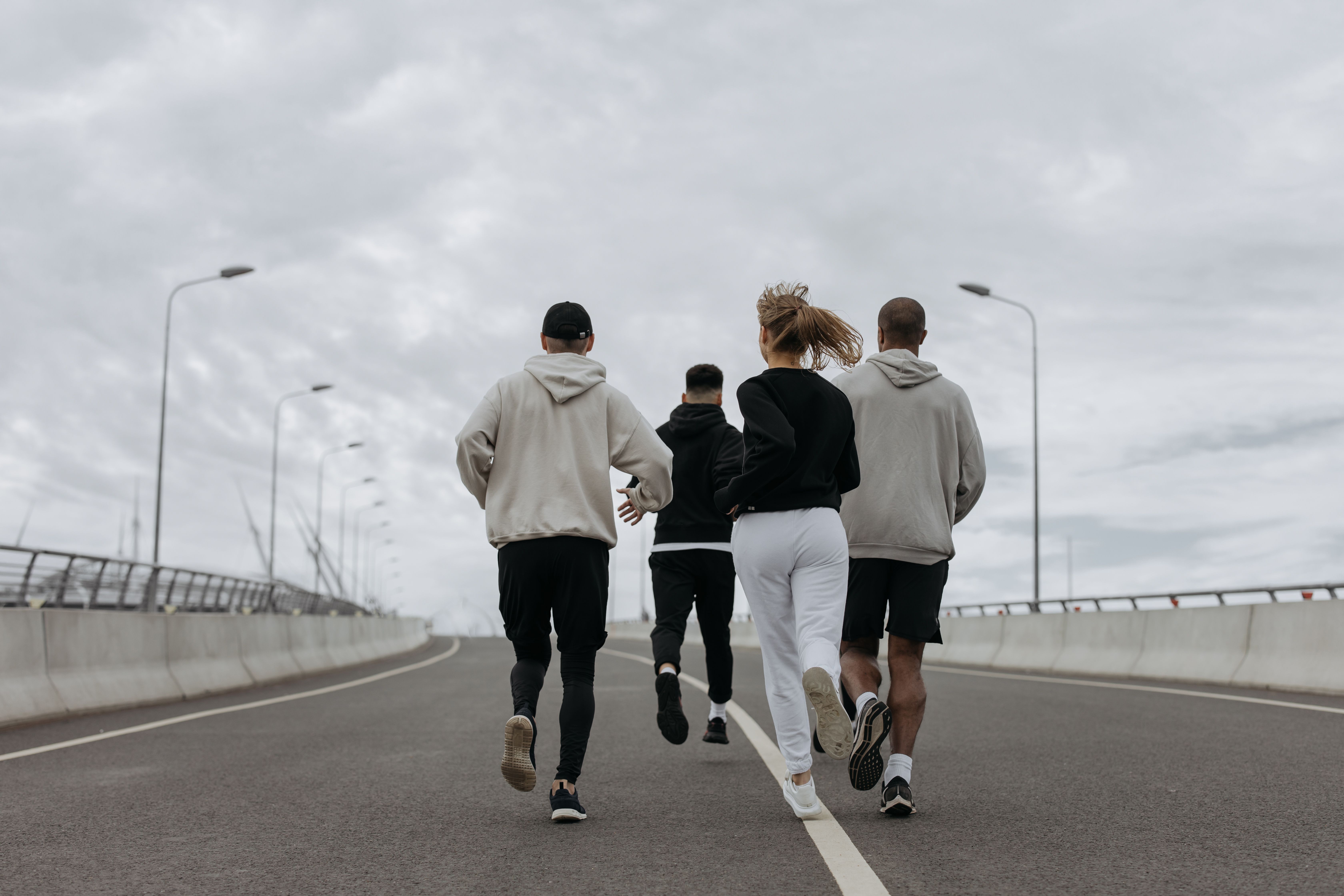
If there is one intervention worth prioritising, it is structured walking, but the reason it helps depends on which problem you have.
In arterial disease, supervised exercise therapy is one of the better-supported treatments available. Patients walk until discomfort begins, rest until it clears, then repeat, typically over about half an hour several times a week. Over weeks this encourages small collateral vessels to develop around the blockage, and it reliably improves pain-free walking distance. The counterintuitive part is that walking into the discomfort is the point rather than something to avoid.
In venous disease, walking works mechanically. Every step contracts the calf muscles, which squeeze the deep veins and push blood upward. The calf is often described as a second heart for this reason. Sustained standing without walking is the worst position for venous return, worse than sitting, because the muscles stay still while gravity keeps working.
Compression, done correctly
For venous problems, graduated compression stockings are the single most useful non-surgical measure. Graduated means tightest at the ankle, easing further up, which supports the direction blood should travel. They work best when put on before getting out of bed, while swelling is at its lowest.
Compression strength matters and should be matched to the problem rather than bought at random. It is also the step that most often gets abandoned, usually because the stockings were uncomfortable, the wrong strength, or difficult to get on. Those are solvable problems worth raising rather than reasons to give up.
The critical caveat bears repeating. If your leg pain is arterial, compression can reduce an already limited blood supply. Anyone with cold feet, weak pulses, non-healing wounds, or pain relieved by lowering the leg should have circulation tested before starting compression.
Elevation and how you sleep
Raising the legs above the level of the heart for around twenty minutes in the evening lets gravity assist venous return and reduces swelling. Propping the foot of the mattress slightly can extend the benefit overnight.
Again, this applies to venous problems. In significant arterial disease, elevation reduces perfusion and often increases pain, which is why some patients instinctively sleep with the leg dangling. If that describes you, treat it as a symptom worth reporting rather than a preference.
Smoking is the single biggest arterial factor
Smoking is the strongest modifiable risk factor for peripheral arterial disease. It damages the vessel lining, accelerates plaque formation, and constricts vessels acutely. Stopping slows progression, improves walking distance, and substantially improves the durability of any procedure performed later.
Combination approaches, behavioural support alongside pharmacological help, work considerably better than willpower alone. This is worth a dedicated conversation rather than a line in a discharge summary.
Blood sugar, blood pressure and cholesterol
Peripheral arterial disease is atherosclerosis, the same process that narrows the coronary arteries. Managing the drivers of that process protects the legs and the heart at the same time.
Diabetes is particularly important here for two reasons. It accelerates arterial disease, and the accompanying nerve damage can blunt the warning pain that would otherwise prompt someone to seek help earlier. That combination is why people with diabetes are advised to inspect their feet regularly and to have circulation formally assessed rather than assumed.
Movement through the day, not just at the gym
For venous return, frequency matters more than intensity. Long stretches of motionless sitting or standing allow blood to pool regardless of how hard you exercised that morning.
Simple ankle pumps, flexing the foot up and down to engage the calf, are genuinely useful during long flights, long drives, and desk-bound afternoons. Standing up every half hour or so does more for leg circulation than one concentrated workout followed by eight sedentary hours.
Diet and hydration, honestly framed
Dehydration thickens blood and worsens cramping, so adequate fluid intake is sensible. Excess dietary sodium promotes fluid retention and makes swelling worse, so moderating salt helps symptomatically. Carrying less weight reduces the pressure load on leg veins.
What deserves plain speaking is the limit of all this. Supplements marketed for vein health, horse chestnut extract and similar, have modest evidence for symptom relief at best, and none of them repair a valve that has already failed. Diet supports circulation. It does not reverse structural disease.
What lifestyle measures cannot fix
This is the part most articles leave out. Once a vein valve has failed, no amount of walking, hydration or elevation restores it. Once an artery is significantly narrowed by plaque, lifestyle changes slow progression and build collateral flow, but they do not reopen the vessel.
Conservative measures remain worthwhile in both cases, and they are usually required before insurance will authorise procedural treatment. But they are management, not cure, and the point at which they stop controlling symptoms is the point to escalate rather than persist.
For venous reflux, vein ablation closes the leaking vein through a needle puncture under local anaesthetic, with walking the same day. For arterial narrowing, angioplasty and stenting can restore flow through a small puncture rather than an incision.
Get tested before you self-treat
The tests are quick and comfortable. An ankle-brachial index compares blood pressure at the ankle with the arm and screens for arterial narrowing in a few minutes. A venous duplex ultrasound shows in real time whether valves are leaking and where. Neither involves needles, dye, or radiation.
Anyone with leg pain on walking, evening swelling, visible varicose veins, skin changes around the ankle, or a foot wound that is slow to heal should be tested rather than working through a generic checklist. Our overview of leg swelling covers the venous side in more depth.
Better circulation is a reasonable goal. Knowing which half of your circulation needs the help is what makes the effort pay off.
Frequently Asked Questions
What is the fastest way to improve circulation in the legs?
Regular walking is the most effective single measure for both arterial and venous problems, though it works by different mechanisms. For venous issues, add graduated compression and evening elevation. For arterial disease, structured walking programs improve pain-free walking distance over several weeks.
Do compression stockings improve leg circulation?
They help venous circulation by supporting the return of blood toward the heart, and they are a mainstay of treating venous insufficiency. They can be harmful if the underlying problem is reduced arterial blood supply, so circulation should be tested before starting them.
Can poor leg circulation be reversed?
Lifestyle measures slow progression and improve symptoms, but a vein valve that has already failed does not recover, and lifestyle changes do not reopen a significantly narrowed artery. Procedures such as vein ablation or angioplasty address the structural problem directly.
Does elevating my legs help circulation?
It helps venous circulation by letting gravity assist blood returning to the heart, and it reduces swelling. In significant arterial disease, elevation can reduce blood supply and increase pain. If lowering the leg relieves your pain, seek assessment before elevating routinely.
How do I know whether my problem is arterial or venous?
Arterial problems typically cause cramping after a predictable walking distance, cold feet and weak pulses. Venous problems typically cause heaviness, evening ankle swelling and relief with elevation. An ankle-brachial index and a venous ultrasound confirm which applies.

Get a circulation plan tailored to your case
Ankle-brachial index, Doppler ultrasound, and labs available same-day at Conroe, The Woodlands, and Huntsville. Most insurance accepted.
Book Your Evaluation